SelfPrep is Fluorobiotech's proprietary protein extraction platform designed to simplify and accelerate recombinant protein production. By engineering microbial hosts to function as self-extracting systems, SelfPrep eliminates the need for conventional mechanical lysis methods while improving process efficiency, yield, and scalability. The technology enables faster, more resource-efficient biomanufacturing, helping organizations streamline development workflows and bring innovative products to market with greater confidence.
At the heart of our advancements is our patented SelfPrep technology, a groundbreaking platform designed to make the production of essential molecules simpler and more affordable.

Lowers operating and capital expenses by eliminating costly lysis reagents and removing the need for specialized mechanical equipment, improving overall manufacturing economics.

Achieves rapid protein extraction with greater than 85% cell lysis and up to 1.5X higher product yields, enabling faster, more efficient development and biomanufacturing workflows.

Easily integrates into existing biomanufacturing workflows while introducing advanced protein extraction capabilities without disrupting established processes.

SelfPrep supports sustainable biomanufacturing by reducing energy consumption and eliminating the need for animal-derived extraction reagents, helping organizations meet evolving regulatory and environmental expectations.

Supports decentralised manufacturing with minimal infrastructure needs.
SelfPrep utilizes a proprietary genetic control system to transform microbial cells into self-extracting production platforms. During cultivation, recombinant proteins are produced under standard growth conditions while the lytic mechanism remains inactive. Following harvest, a simple trigger activates the extraction process, enabling rapid cell lysis and efficient release of intracellular proteins without the need for conventional mechanical disruption methods such as sonication or high-pressure homogenization. The result is a streamlined, scalable protein extraction workflow designed for modern biomanufacturing.
SelfPrep empowers researchers by making recombinant products faster, more affordable, and more sustainable, unlocking new possibilities in biotech innovation.
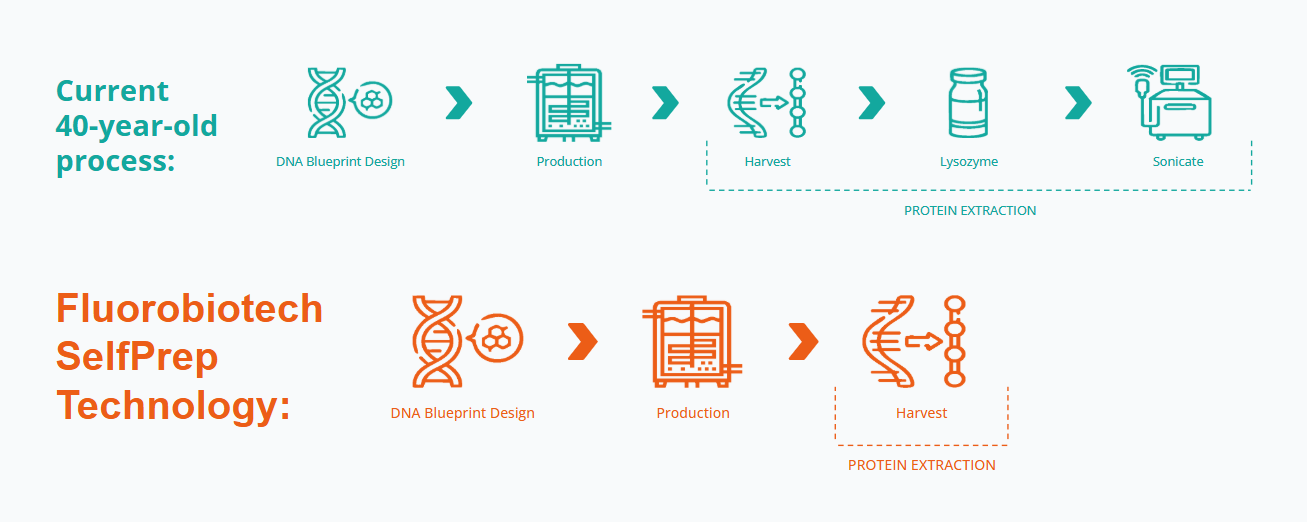
Growth of E. coli BL21 (DE3) expressing histidine tagged fluorescent protein (mCherry). Strains were transformed with pXpH2.0mCherry (control) and pXpAL2.0mCherry (SelfPrep) vectors. Cultures were grown at 26°C until an appropriate OD600 and induced with IPTG.
View full study
Percentage lysis of cells grown at either 26°C or 37°C. Cells were spun down (1 mL), supernatant removed, and pellets frozen at -20°C. Cells were then allowed to thaw on ice followed by addition of 1 mL buffer (20mM TRIS (pH 7.4) + nucleases), mixed and incubated for 15 min after which optical density readings were taken.
View full study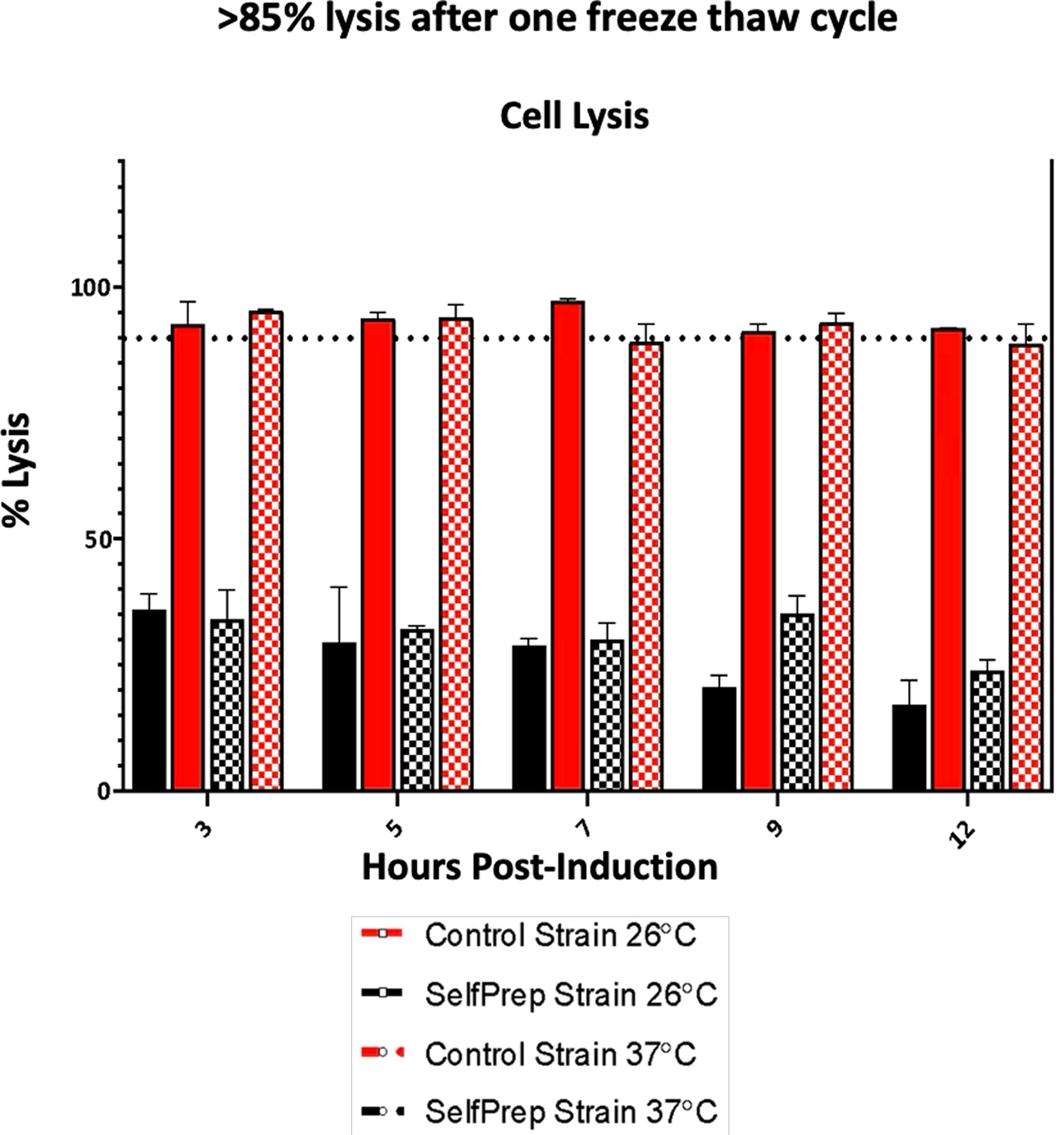
Hammanshand Road,
Stellenbosch Central,
7599
info@fluorobiotech.com
+27 87 265 4363

Address
Phone
CONTACT FORM